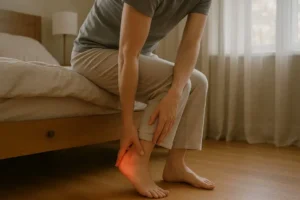
If you’ve been struggling with chronic heel pain and conservative treatments haven’t worked, your doctor may have recommended Plantar Fasciitis Embolization (PFE) — a minimally invasive procedure designed to target abnormal blood vessels contributing to persistent pain.
Knowing what to expect can help you feel confident and prepared. Here’s a simple step-by-step guide to getting ready for your procedure.
Step 1: Your Consultation & Evaluation
Before scheduling embolization, your specialist will:
- Review your medical history
- Evaluate prior treatments (stretching, orthotics, injections, therapy)
- Perform imaging (often ultrasound or MRI)
- Confirm that abnormal blood flow is contributing to your pain
This step ensures you’re a strong candidate for the procedure and that embolization is the right approach for your specific condition.
Step 2: Medication Review
Your provider will review all medications and supplements you’re taking.
You may be asked to:
- Temporarily stop blood thinners (if medically appropriate)
- Avoid certain anti-inflammatory medications before the procedure
- Fast for several hours prior, depending on sedation plan
Always follow your physician’s specific instructions carefully.
Step 3: The Day of the Procedure
Plantar Fasciitis Embolization is typically performed in an outpatient setting.
Here’s what happens:
- A small access point is made, usually in the wrist or groin.
- A tiny catheter is guided through blood vessels using advanced imaging.
- The abnormal vessels supplying the painful plantar fascia are identified.
- Microscopic particles are delivered to reduce abnormal blood flow.
The procedure usually takes about 60–90 minutes.
Most patients go home the same day.
Step 4: Immediate Recovery
After the procedure:
- You’ll rest briefly in a recovery area.
- Mild soreness at the access site is normal.
- Most patients resume light activity within 24–48 hours.
- Strenuous exercise may be restricted for a short period.
Your provider will give you clear post-procedure instructions.
Step 5: What to Expect in the Weeks After
Pain relief is often gradual.
- Some patients notice improvement within 1–2 weeks.
- Continued improvement may occur over several weeks as abnormal vessels regress and tissue begins to normalize.
- Physical therapy or stretching may still be recommended.
The goal is long-term pain reduction without surgery or repeated steroid injections.
Frequently Asked Questions
Is it painful?
The procedure is performed under local anesthesia and mild sedation. Most patients report minimal discomfort.
Is it safe?
When performed by an experienced interventional specialist, embolization is considered safe and minimally invasive, with low complication rates.
How long does relief last?
Studies show many patients experience sustained relief, especially when combined with proper rehabilitation and footwear adjustments.
Final Thoughts
Plantar Fasciitis Embolization offers a promising option for patients with chronic heel pain that hasn’t responded to traditional treatment. Preparing properly — and knowing what to expect — can make your experience smooth and stress-free.
If you’re considering embolization, speak with a specialist to determine whether you’re a candidate and develop a personalized treatment plan.